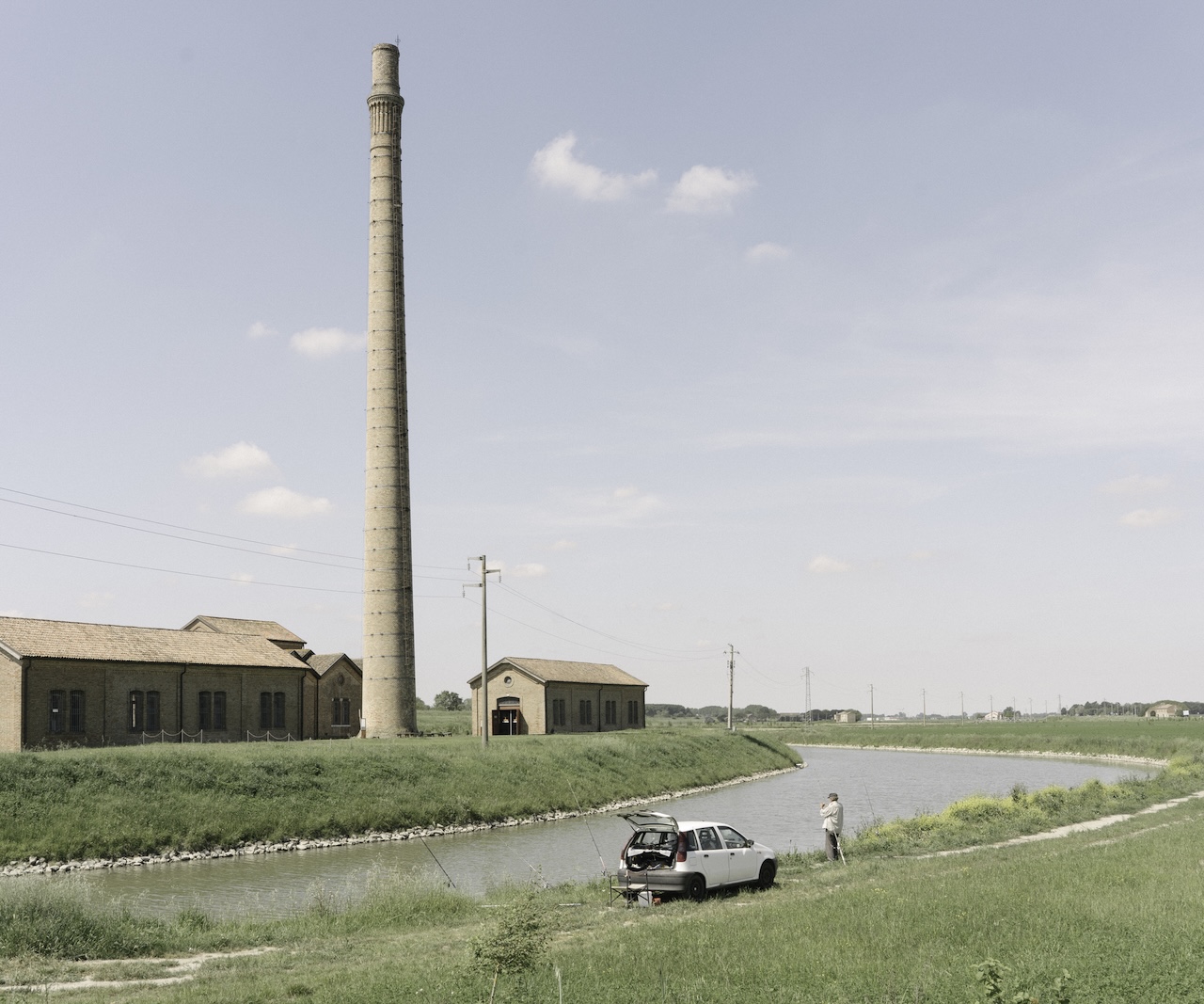
DOVE SCOMINCIA EL MARE/ WHERE THE SEA BEGINS di MARCO LUMINI
Il delta del Po non è un paesaggio naturale. È una vasta architettura d’acqua e terra, creata nel XVII secolo quando la Repubblica di Venezia deviò il corso del fiume per proteggere la laguna e sostenere i commerci. Da allora, gli esseri umani hanno continuato a rimodellare il flusso dell’acqua, a ridisegnarne i confini, ad alzare argini e a bonificare terre coltivabili sottraendole alle paludi.
Con l’introduzione delle pompe centrifughe alla fine dell’Ottocento, sembrò possibile dominare l’acqua una volta per tutte. Eppure la sopravvivenza di queste terre finì per legarsi in modo irreversibile alla tecnologia. Se i macchinari che controllano l’acqua venissero spenti, la maggior parte del delta finirebbe sommersa in pochi giorni.
Mantenere questo “controllo” è una sfida sempre più complessa.
Ogni anno vengono introdotte infrastrutture e interventi, ma non si giunge mai a una soluzione definitiva nella lotta con l’acqua.
Il progetto fotografico esplora il paradosso di un luogo che appare come un paesaggio naturale ma esiste solo finché gli esseri umani continuano a far funzionare le macchine. Le immagini ritraggono paesaggi rurali ai margini del mare, raccontando una fragile convivenza in cui la natura e i suoi abitanti non hanno ancora trovato un equilibrio.
The Po Delta is not a natural landscape. It is a vast structure of water and land, created in the 17th century when the Republic of Venice diverted the course of the river to protect the lagoon and sustain trade. Since then, humans have continued to reshape the flow of the water, redraw its boundaries, build embankments and reclaim arable land from the marshes.
With the introduction of centrifugal pumps in the late nineteenth century, it seemed possible to master the water once and for all. Yet the survival of these lands became irreversibly linked to technology. If the machinery controlling the water were to be switched off, most of the delta would be submerged within a few days.
Maintaining this ‘control’ is an increasingly complex challenge. Every year, new infrastructure and measures are introduced, but a definitive solution to the struggle with water is never achieved.
This photographic project explores the paradox of a place that appears to be a natural landscape but exists only as long as humans continue to operate the machinery. The images depict rural landscapes on the edge of the sea, illustrating a fragile coexistence in which nature and its inhabitants have not yet found a balance.
Bio
(Vicenza 1993) Fotografo, ingegnere Edile, architetto, con un approccio multidisciplinare alla narrazione visiva, alla rigenerazione urbana e al design architettonico. Insegna fotografia ed esplora l’intersezione tra spazio, identità e cultura visiva.
Dal 2023, è il fondatore di Catalogo Studio, specializzato in fotografia di architettura e paesaggio; ha lavorato su progetti di riqualificazione urbana e architettonici, collaborando con il gruppo di ricerca G124 di Renzo Piano.
Photographer, civil engineer and architect, with a multidisciplinary approach to visual storytelling, urban regeneration and architectural design. He teaches photography and explores the intersection between space, identity and visual culture.
Since 2023, he has been the founder of Catalogo Studio, which specialises in architectural and landscape photography; he has worked on urban regeneration and architectural projects, collaborating with Renzo Piano’s G124 research group.