Coltivare la luce
«Poi il Signore Dio piantò un giardino in Eden, a oriente, e vi pose l’uomo che aveva plasmato.» (Genesi 2,8)
All’origine c’è un dio giardiniere e un luogo ideale. Il giardino non è la natura, ma la sua rappresentazione disciplinata. Lo dice la parola stessa. Paradiso viene dall’antico iranico pairidaeza, il muro che gira intorno: si recinta uno spazio per custodire un’idea di felicità, e la si chiama Eden, che la tradizione ebraica lega alla delizia. Ma è una delizia che conosciamo solo perché l’abbiamo perduta. Da tremila anni la letteratura del giardino racconta lo stesso gesto: rifare con le mani un paradiso che non c’è più.
È un’arte che la Tuscia conosce meglio di altre: dalle geometrie d’acqua di Villa Lante ai labirinti di bosso di Caprarola, fino al giardino all’italiana di Villa Savorelli, qui a Sutri, dove accanto al giardino sopravvive da secoli un bosco sacro. È in questa terra che l’Italia ha fatto del giardino un genere a sé.
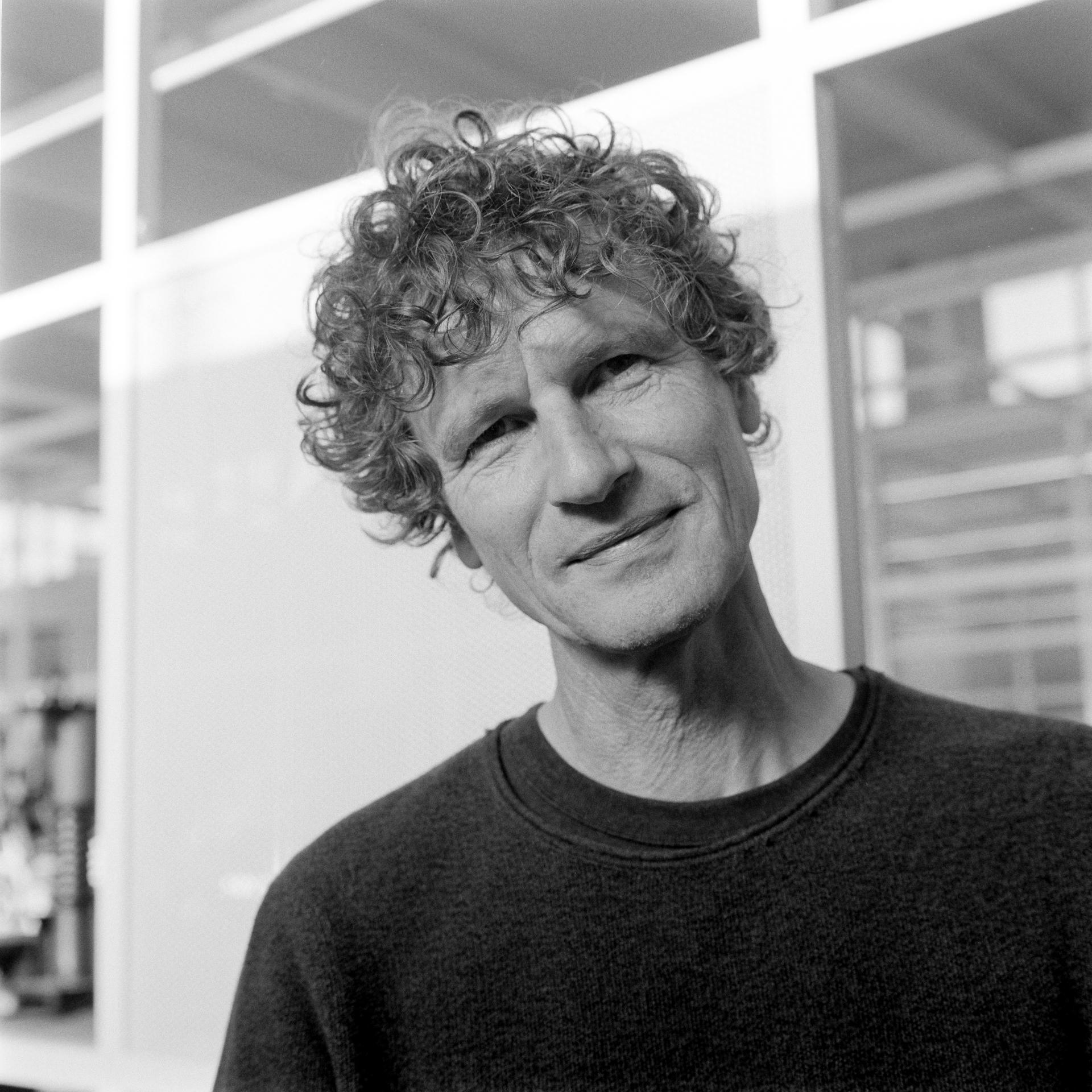
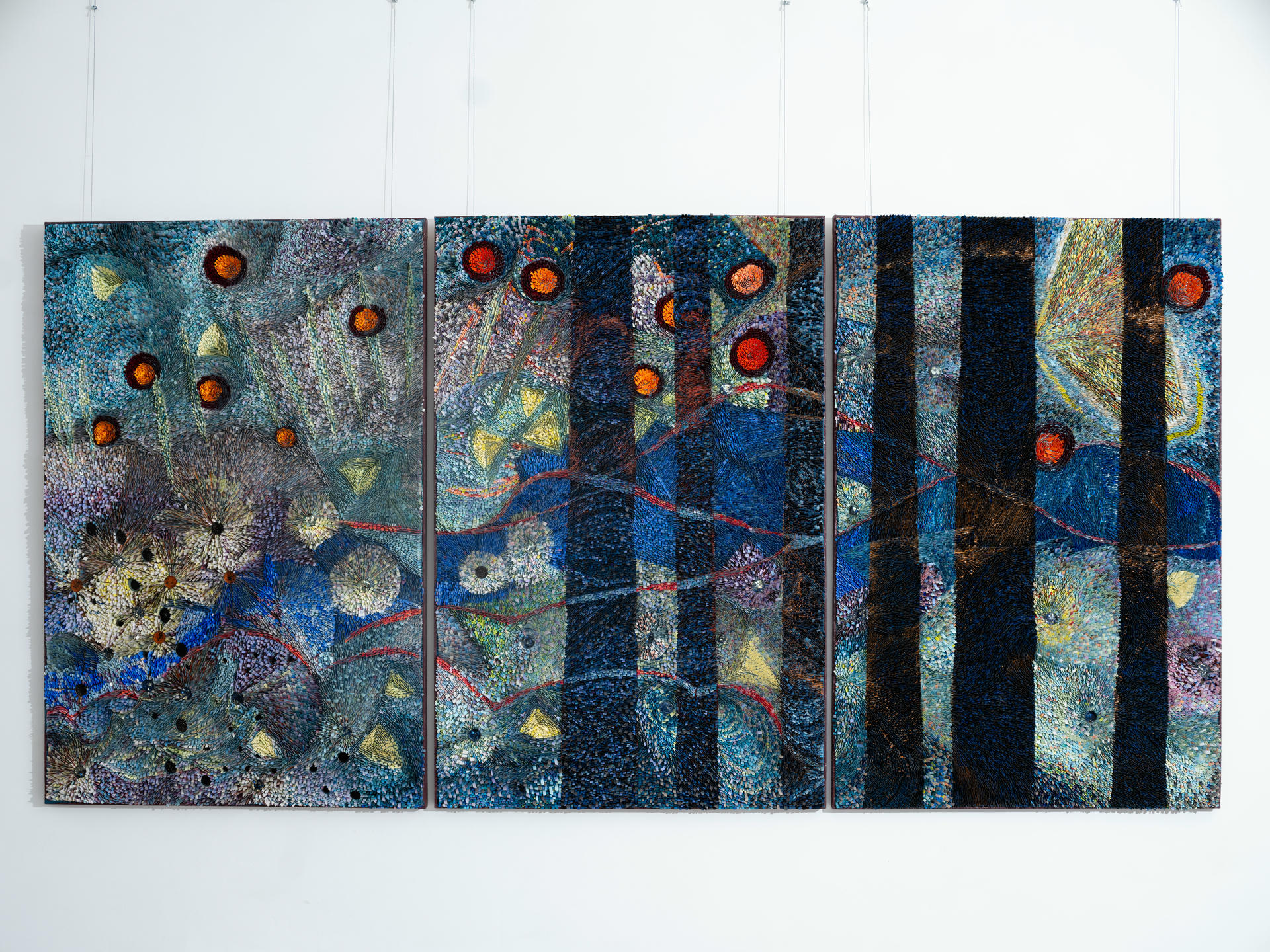
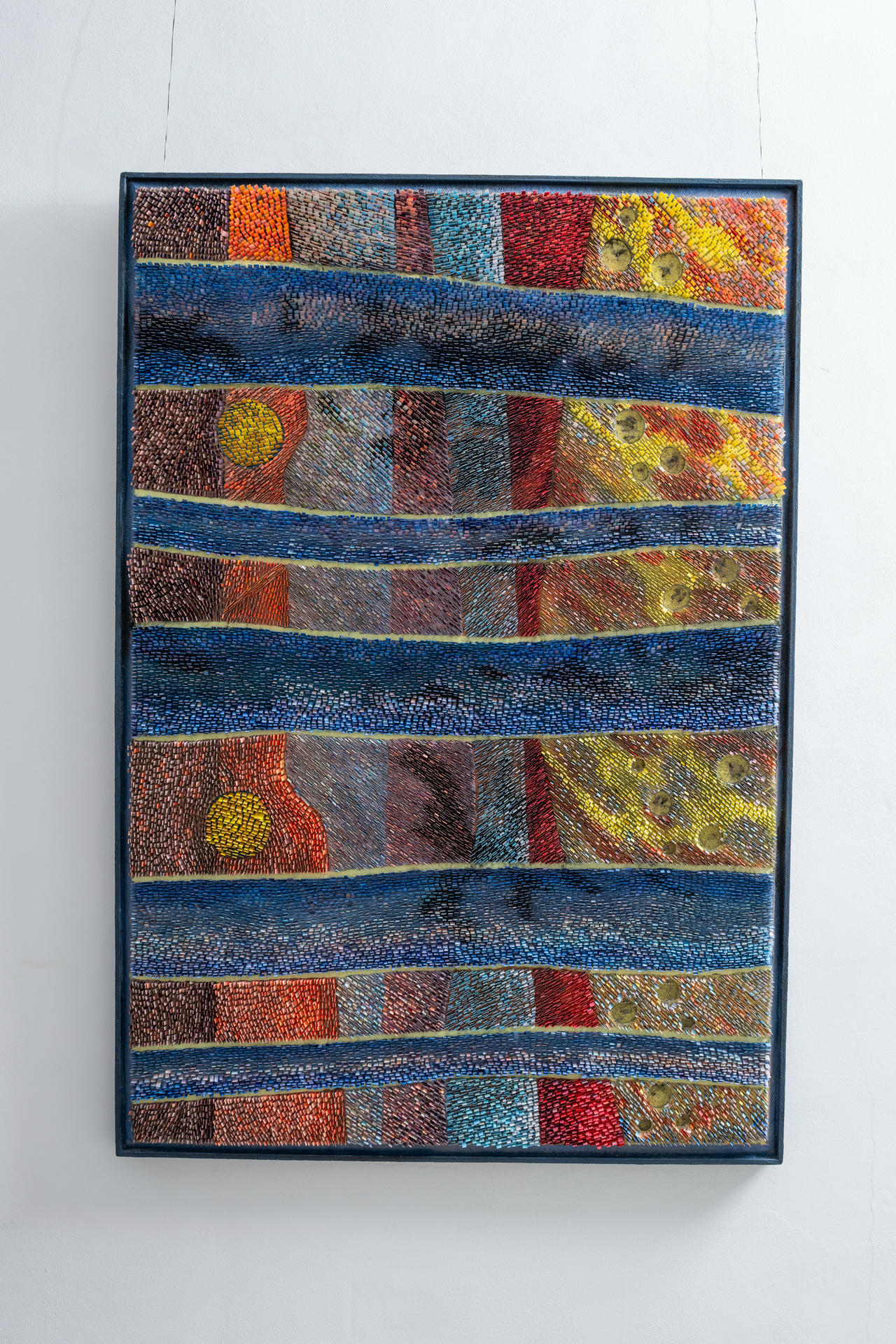
Qui, oggi, lavora Gregor Becker. Alla radice del suo lavoro c’è una parola tedesca, Heimat: il luogo dove si cresce e dove sono le radici. «Una volta che lo perdi, ti resta dentro il richiamo, ma non è mai più la stessa cosa, nemmeno se torni.» Le sue opere non cercano di tornare a quel luogo: lo ricostruiscono, tessera dopo tessera. Nei suoi quadri la natura non è uno sfondo, ma lo spazio in cui l’uomo collabora alla creazione: la seconda creazione, quella affidata alle sue mani.
Del giardino conserva il metodo. Ciò che coltiva non è una pianta, ma la luce: la prima creatura. Per lui la luce non è soltanto un fenomeno ottico, è un organismo che vive nel proprio accadere e muore nella propria cattura. «Non volevo cementare la luce dentro un quadro. La luce è viva: passa, cambia, ti mette in relazione con tutto ciò che hai intorno.»
Tratta l’immateriale come si tratta un campo. Prende ciò che accade in un lampo e lo costringe ai tempi del giardino, alle stagioni, all’attesa. Non dipinge la luce ma la semina.
Come ogni raccolto, l’opera matura nello sguardo, e fuori da quello sguardo non esiste.
«Queste opere esistono solo quando sei presente. Puoi farne tutte le fotografie che vuoi: non succede niente. La cosa accade quando sei lì, davanti.»
BIO
Gregor Becker (Mainz, Germania)
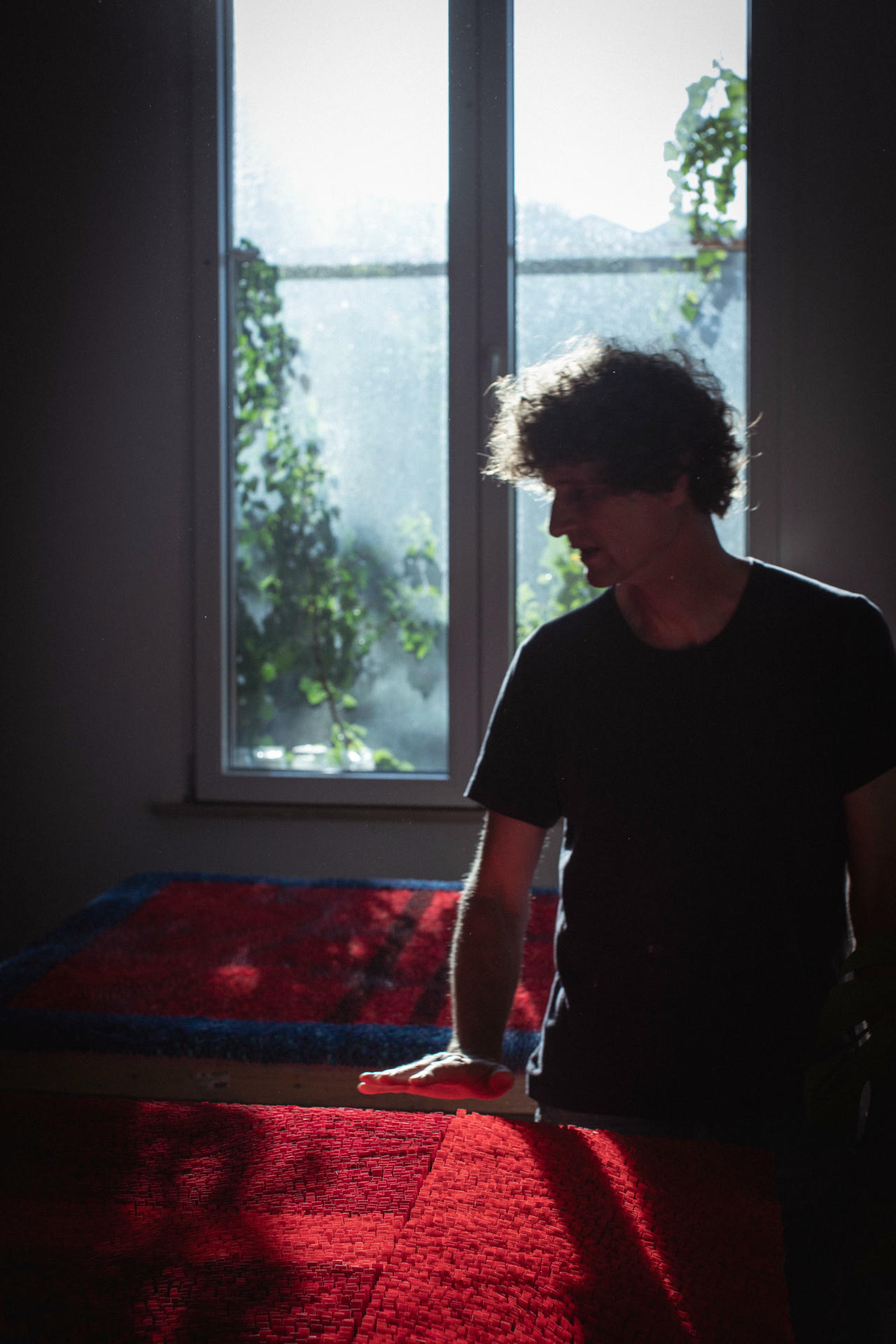
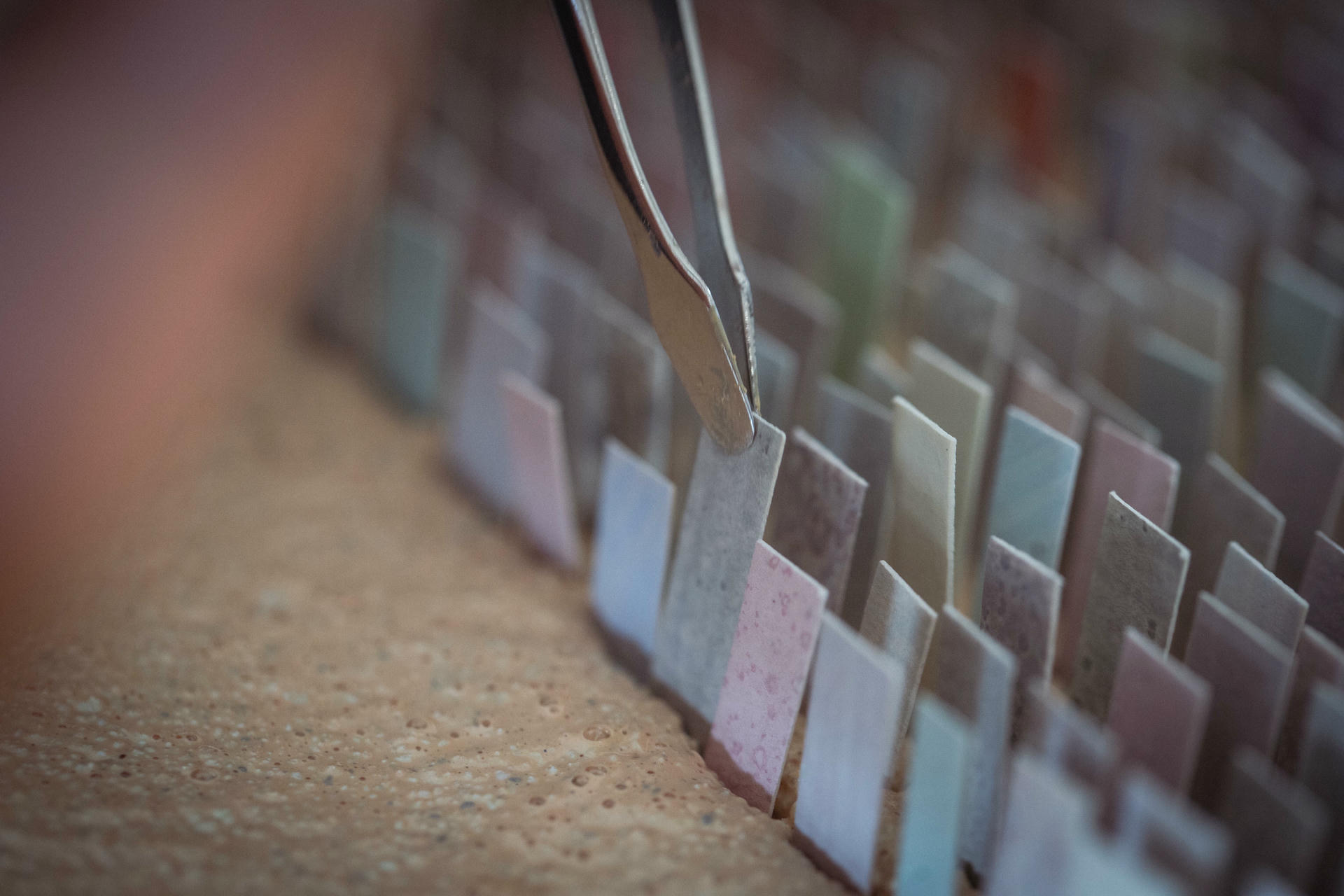
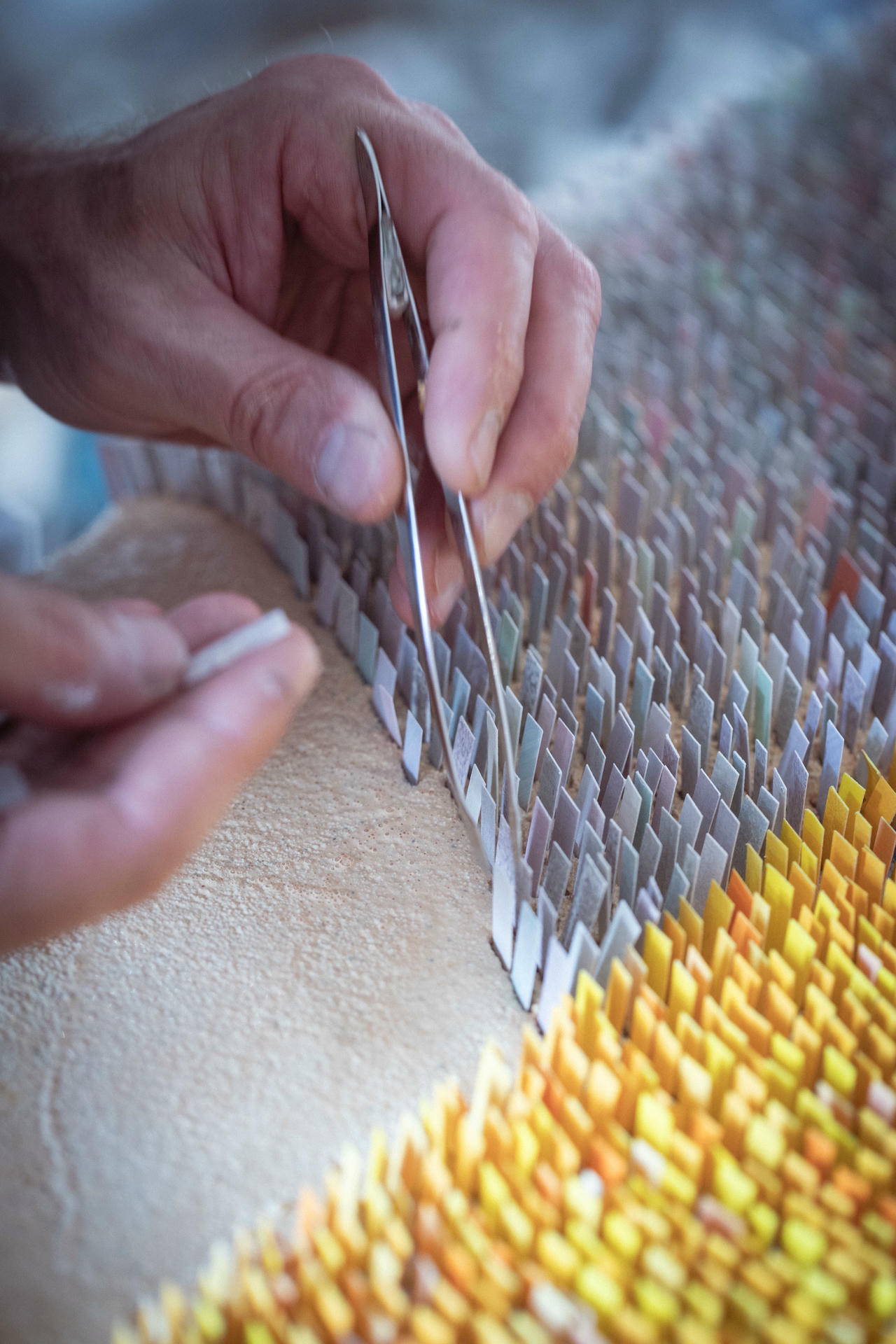
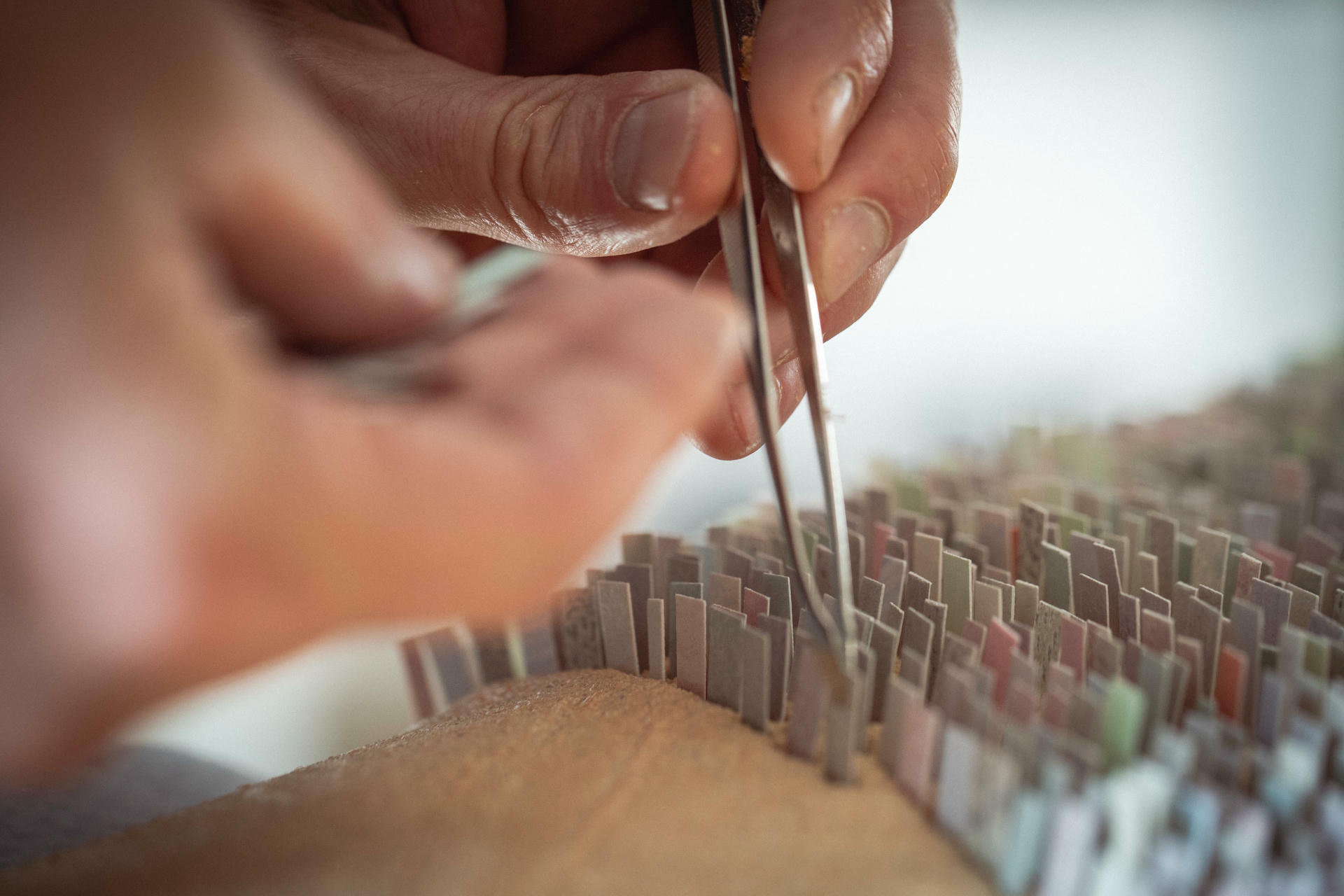
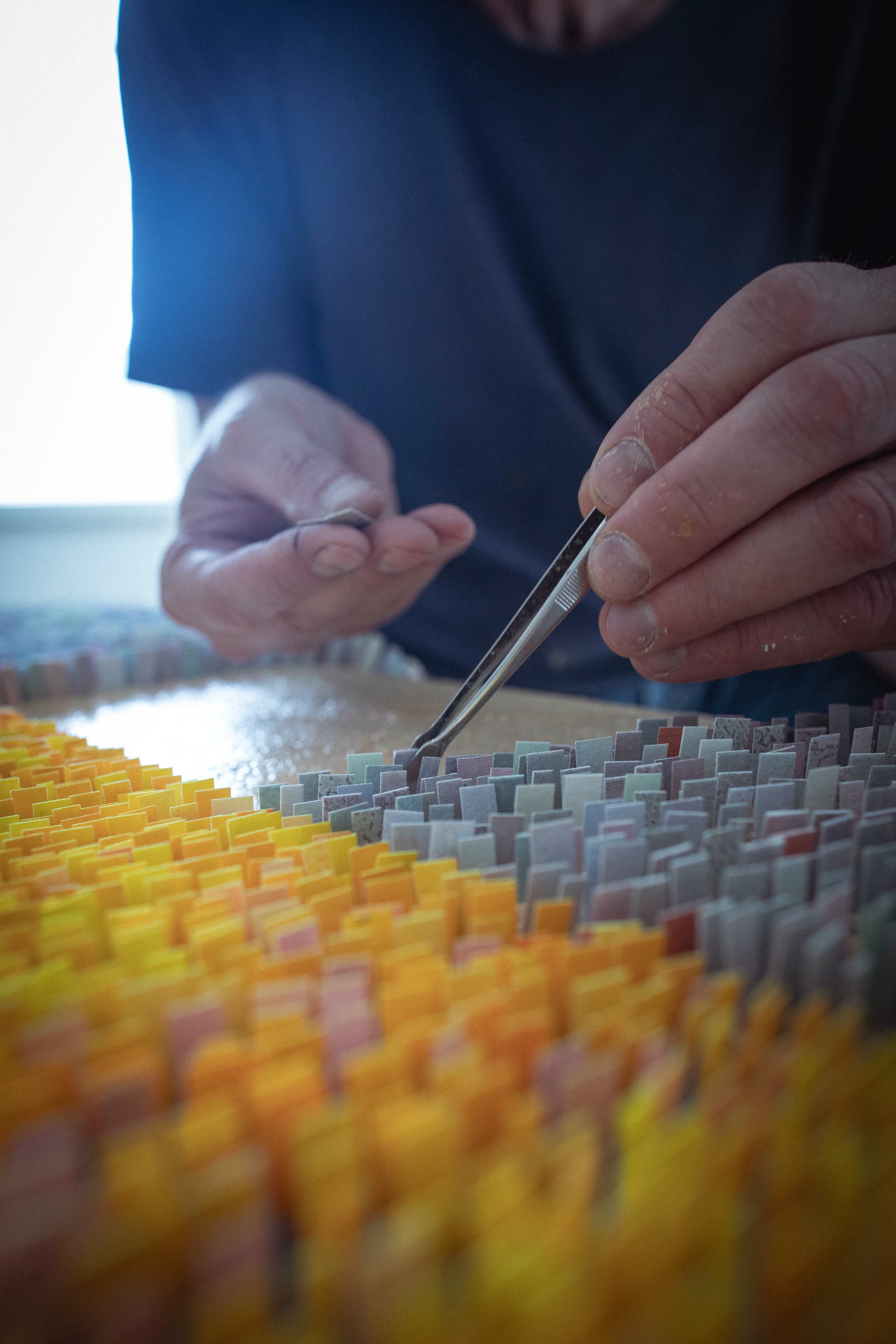
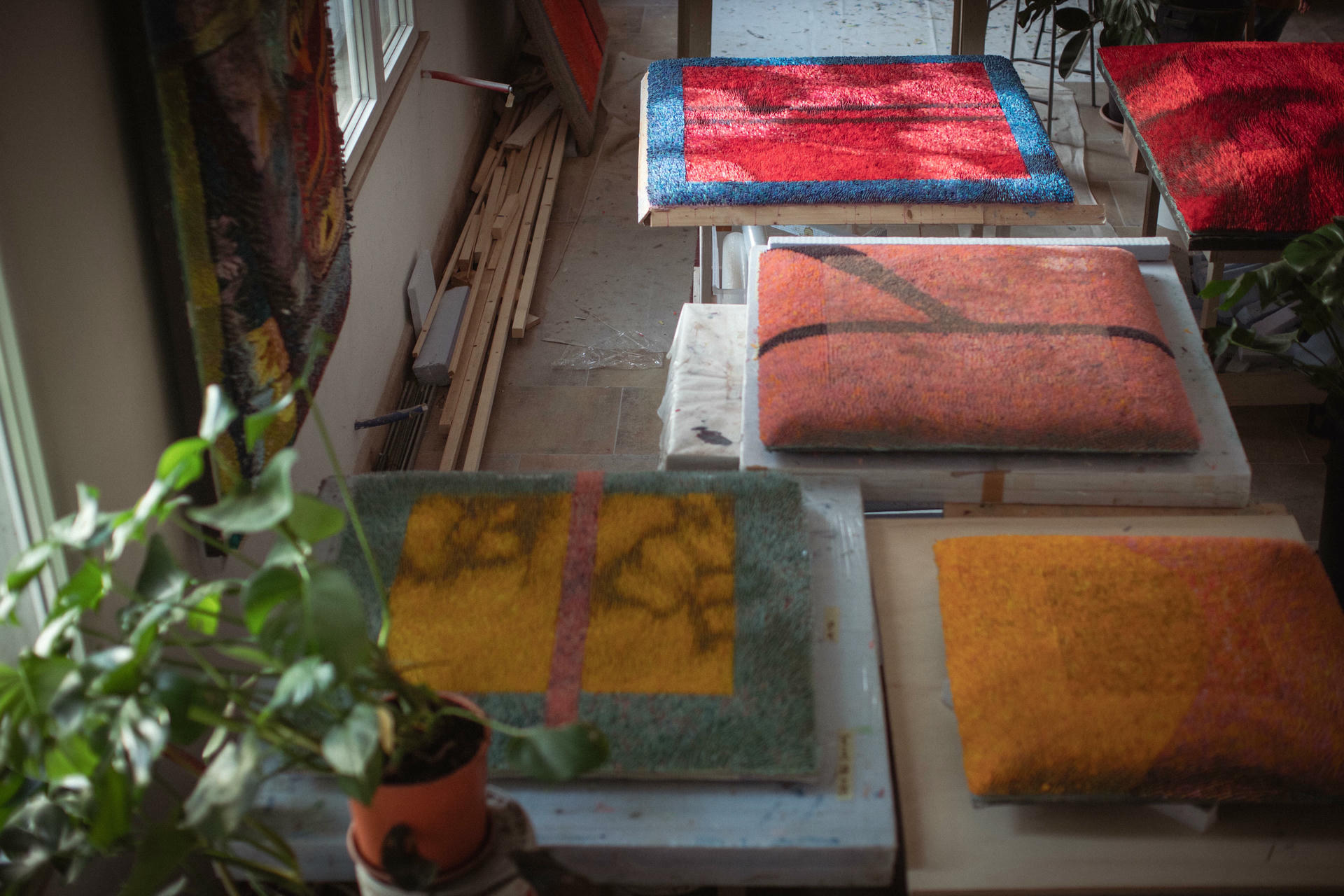
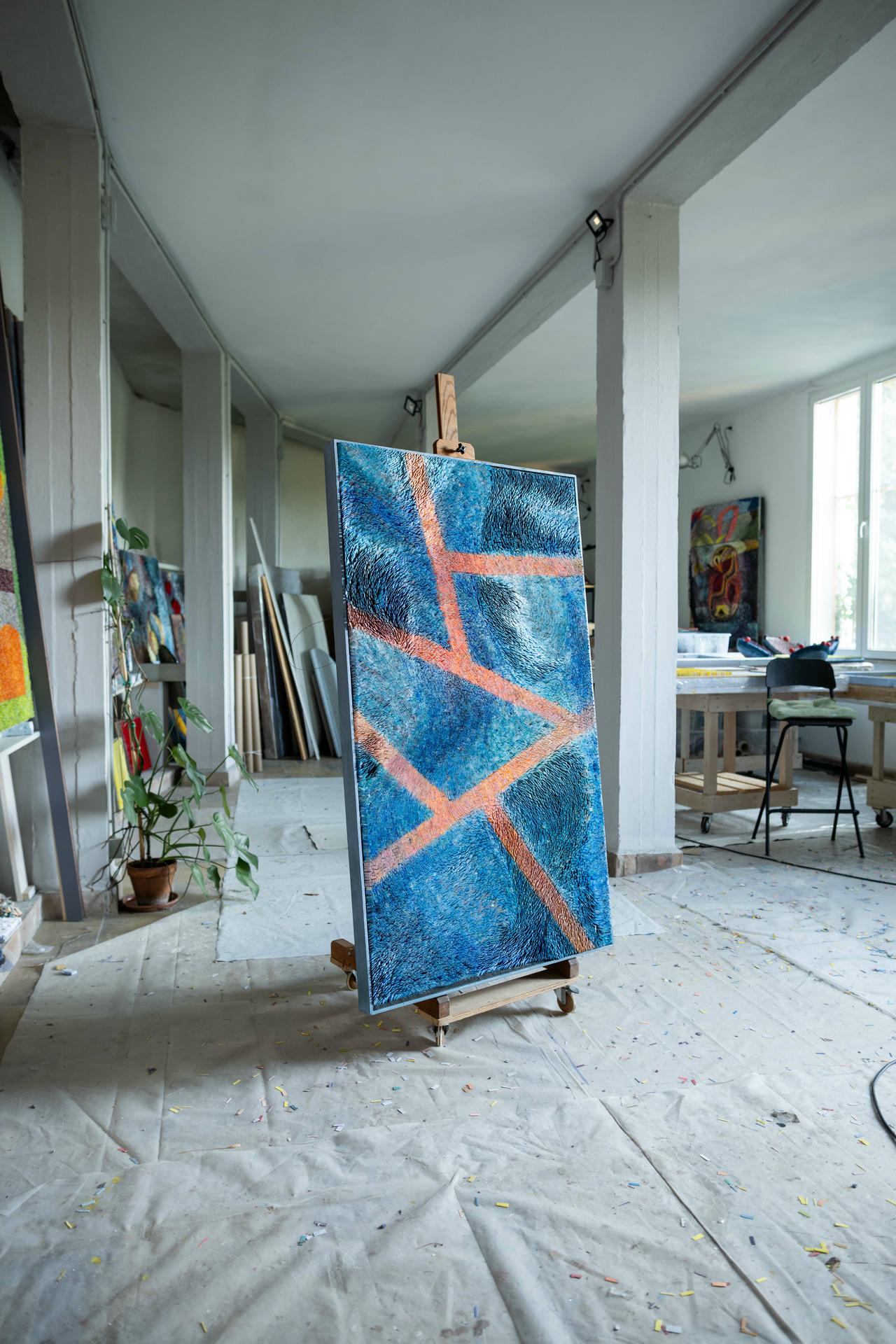
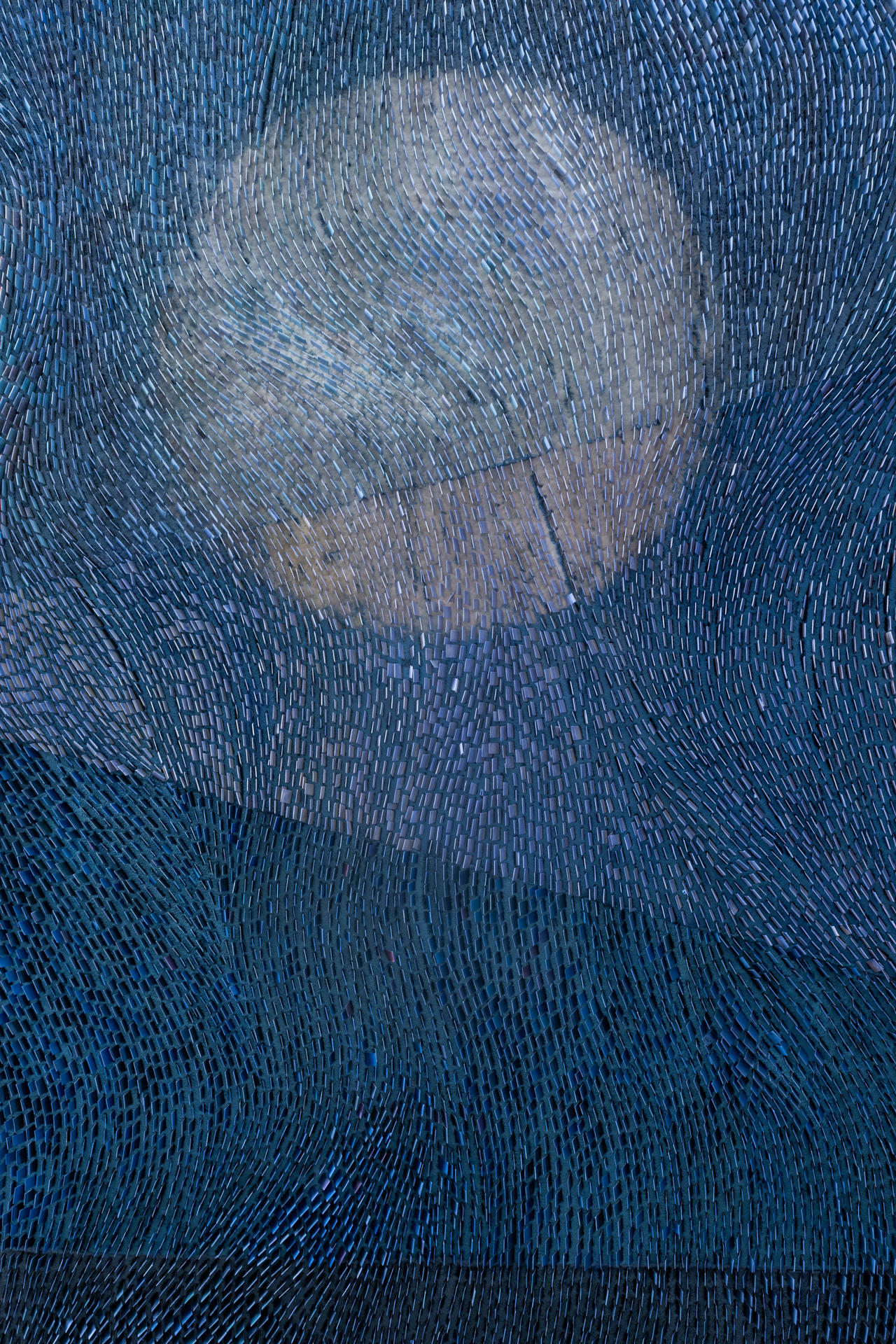
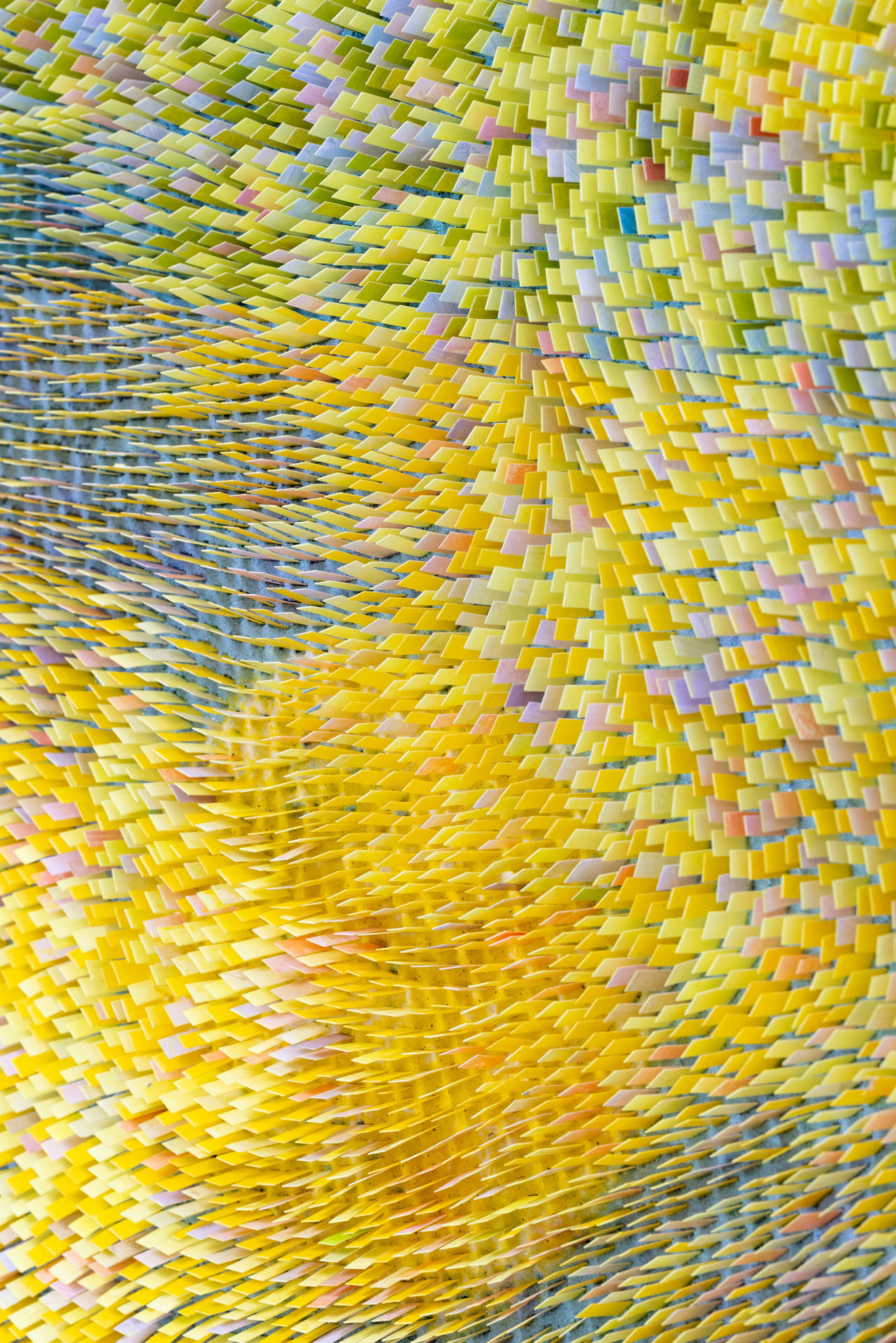
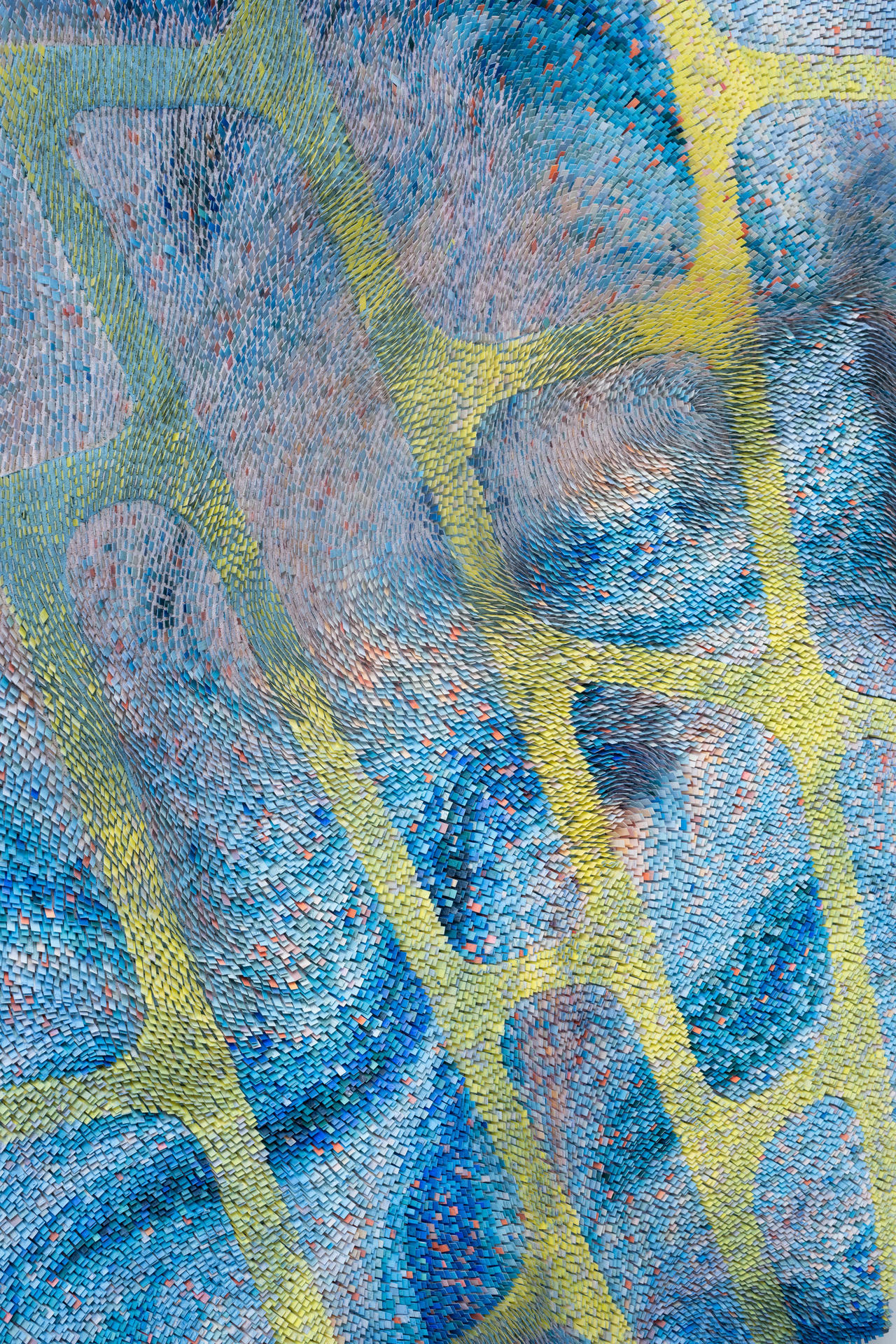
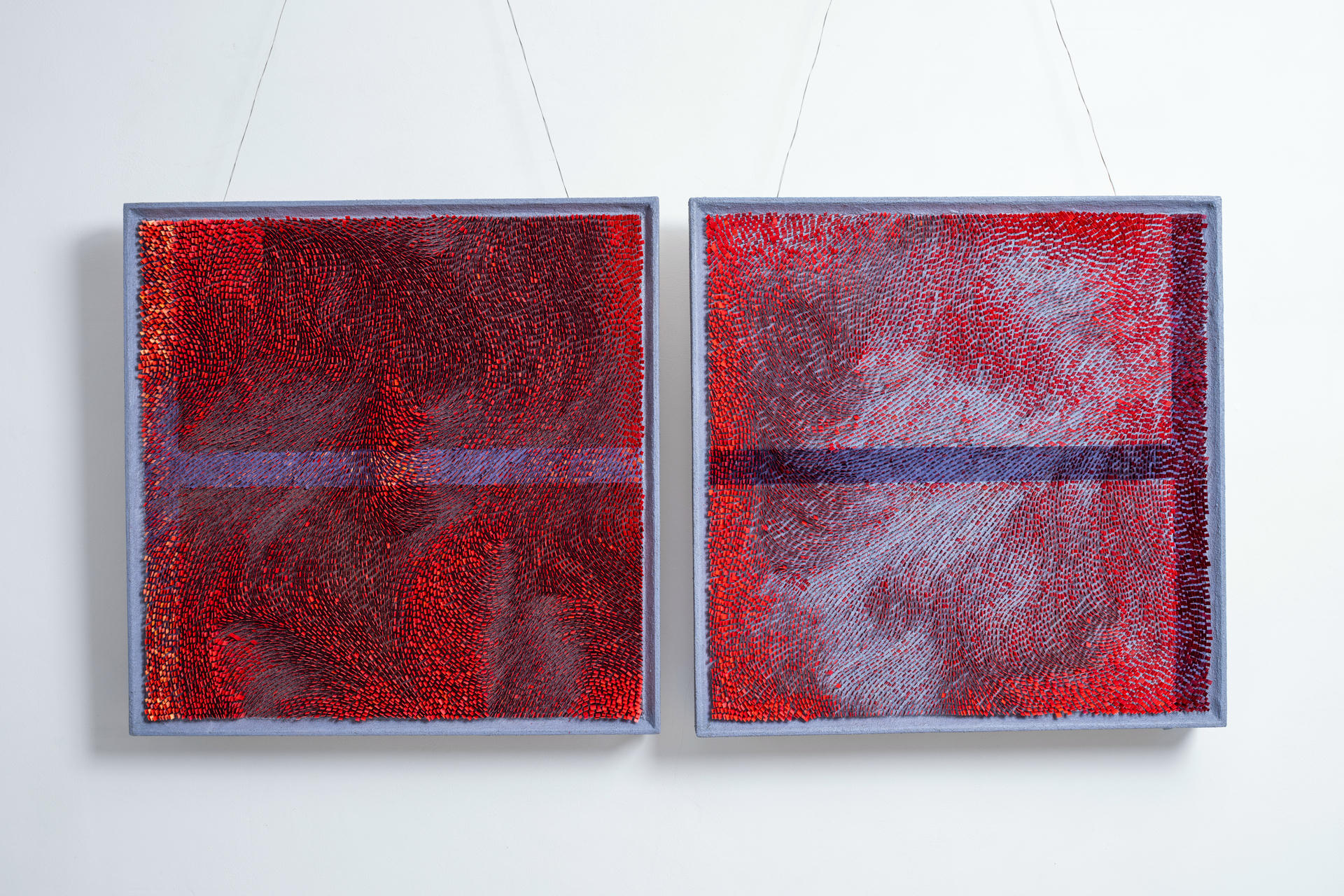
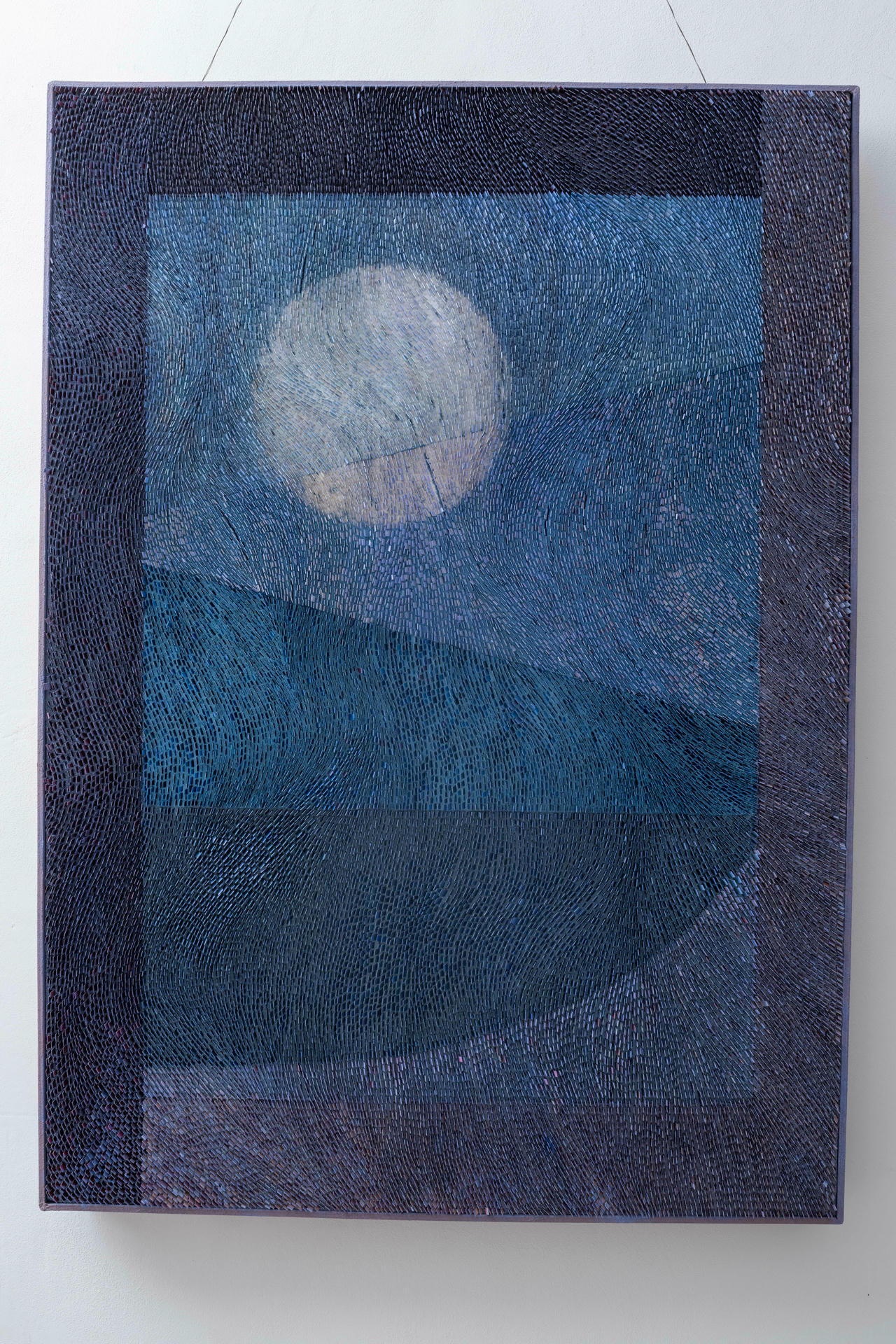
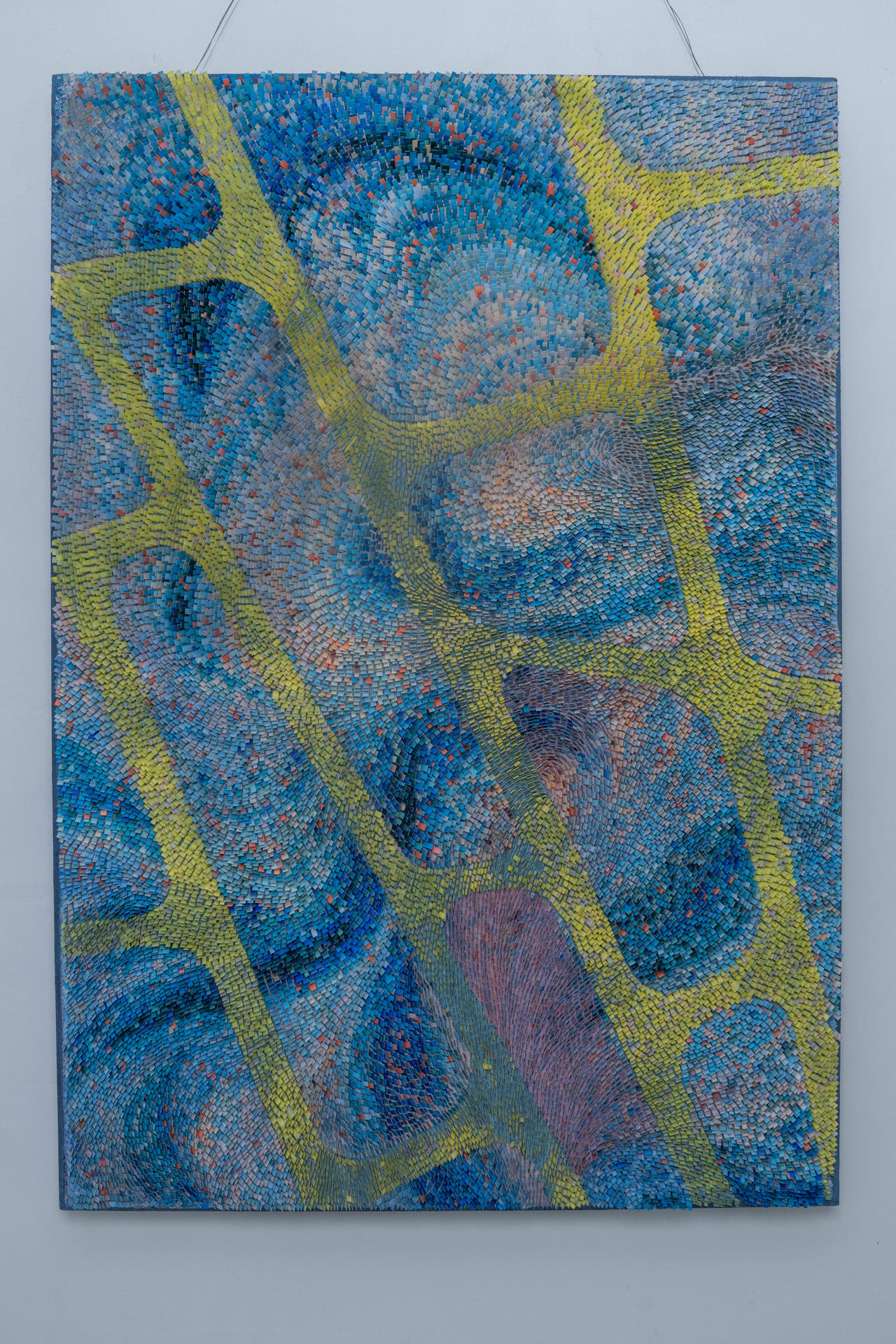
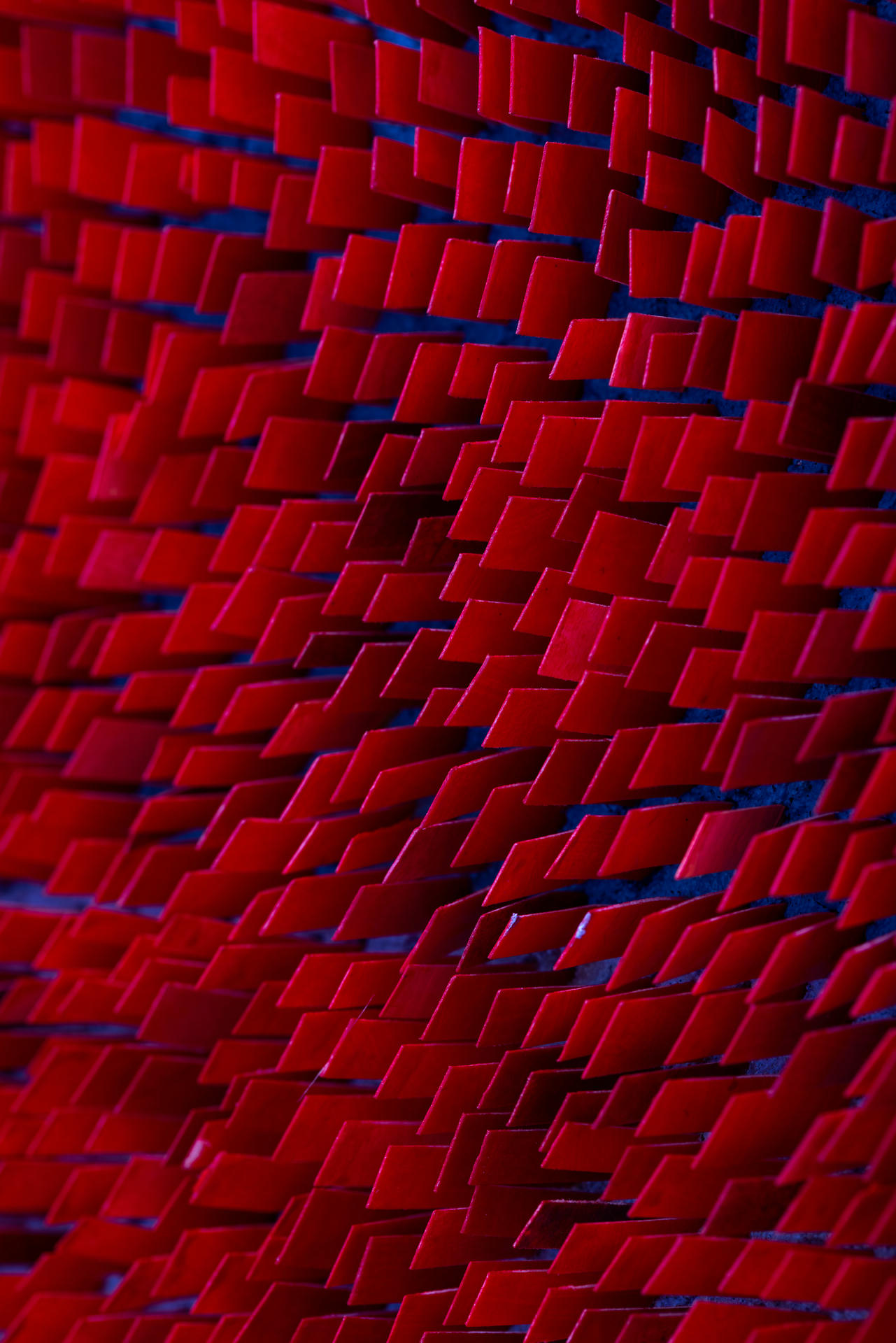
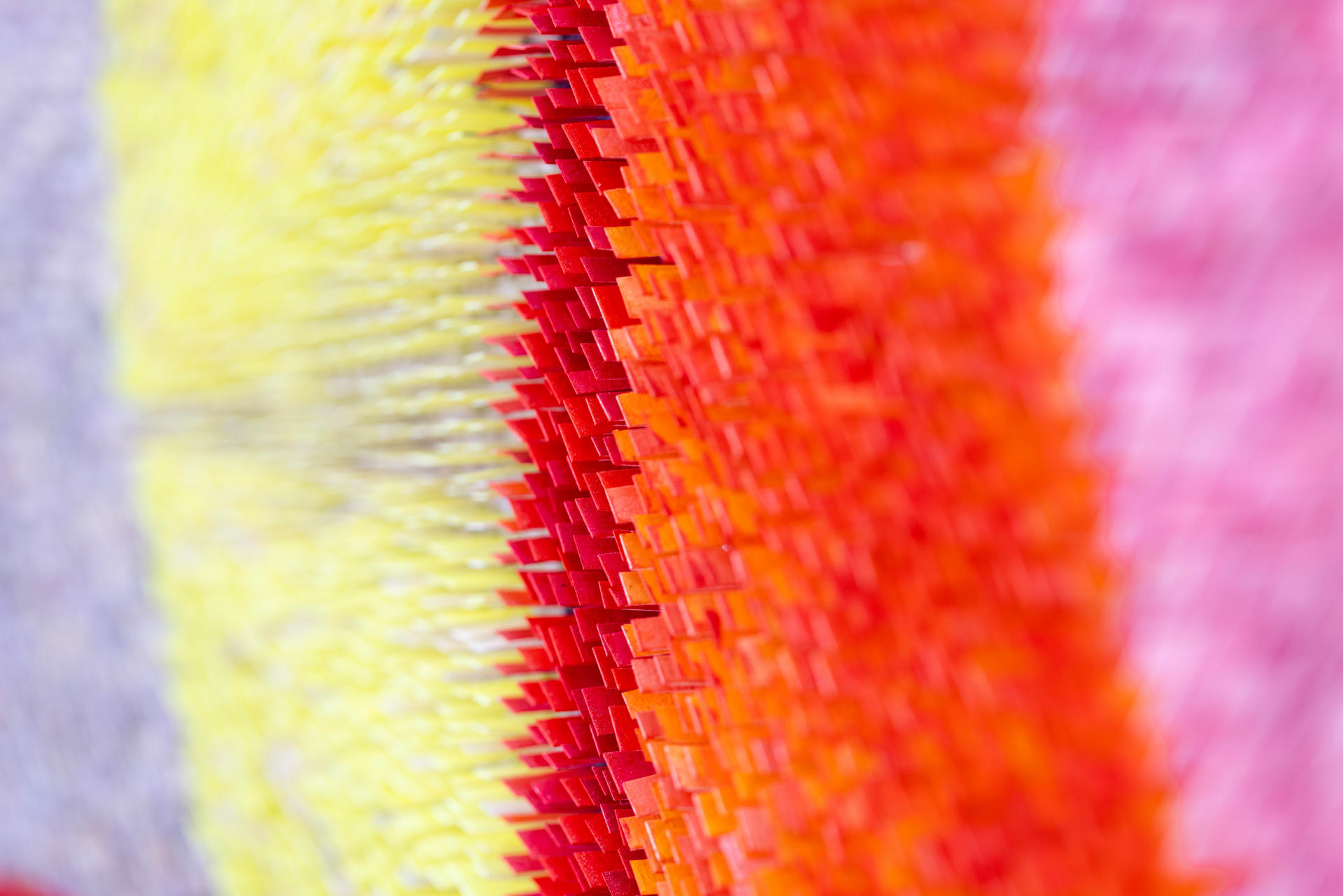
Prima giardiniere, poi architetto del paesaggio formatosi alla Sapienza di Roma, ha lavorato per anni con il mondo vivente tra Germania, Stati Uniti e Australia, prima di farne la materia della sua arte. Da quella lunga frequentazione vengono l’attenzione ai cicli di crescita e il tempo lungo della natura. Dal 2014 mette a punto un linguaggio proprio, tra pittura, scultura e mosaico: superfici di migliaia di tessere di carta dipinta a mano, montate una a una senza disegno preparatorio e inclinate perché la luce passi tra l’una e l’altra, e cambi con lo sguardo di chi guarda. Una sola opera può richiedere mesi.
Vive e lavora tra la Foresta Nera e i Monti Cimini, circondato dai giardini che cura lui stesso.
“And the LORD God planted a garden eastward in Eden; and there he put the man whom he had formed.” (Genesis 2:8)
At the beginning there is a gardener god and an ideal place. The garden is not nature but its disciplined image. The word itself says so. Paradise comes from the old Iranian pairidaeza, the wall that runs around: a space is fenced off to guard an idea of happiness, and it is called
Eden, which Hebrew tradition ties to delight. But it is a delight we know only because we lost it. For three thousand years the literature of the garden has told the same story: to remake by hand a paradise that is gone.
It is an art Tuscia knows better than most: from the water geometries of Villa Lante to the box labyrinths of Caprarola, to the Italian garden of Villa Savorelli, here in Sutri, where beside the garden a sacred wood has survived for centuries. It is in this land that Italy made the garden a genre of its own.
Here, today, Gregor Becker works. At the root of his work lies a German word, Heimat: the place where you grow up and where your roots are. “Once you lose it, the pull of it stays in you, but it is never the same again, not even if you go back.” His works do not try to return to that place: they rebuild it, tile by tile. In his pictures nature is not a backdrop, it is the space where a person takes part in creation: the second creation, the one left to human hands.
From the garden he keeps the method. What he cultivates is not a plant but the light: the first creature. For him light is not only an optical event, it is an organism that lives in its own happening and dies in its own capture. “I did not want to set the light in concrete inside a picture. Light is alive: it passes, it changes, it puts you in touch with everything around you.”
He treats the immaterial as one treats a field. He takes what happens in a flash and forces it into the garden’s time, into the seasons, into waiting. He does not paint the light, he sows it.
Like any harvest, the work ripens in the gaze, and outside that gaze it does not exist. “These works exist only when you are present. Take all the photographs you like: nothing happens. The thing happens when you are there, in front of it.”
Gregor Becker (Mainz, Germany)
First a gardener, then a landscape architect trained at the Sapienza in Rome, he worked for years with the living world across Germany, the United States and Australia before making it the material of his art. From that long acquaintance come his attention to the cycles of growth and to the slow time of nature. Since 2014 he has been shaping a language of his own, between painting, sculpture and mosaic: surfaces of thousands of hand-painted paper tiles, mounted one by one without a preparatory drawing and set at an angle so that the light passes between them and changes with the gaze of whoever looks. A single work can take months.
He lives and works between the Black Forest and Soriano nel Cimino, surrounded by the gardens he tends himself.